Are you dreaming to reconnect with your German roots in 2026, but still not quite sure where to go in Germany? Then look no further than my top 26 list of the 26 best places to visit in Germany in 2026! From the big cultural city hubs to perfectly preserved medieval towns and must-do Germany bucket list items… this list has something for every traveler’s taste!
1. Best places to visit in Germany for historical and cultural highlights:
1. Berlin
Germany’s capital city Berlin is a place where big stories left big footprints. You can walk through layers of history in a single day and feel how much this city has shaped Germany’s past and present.
Many of my previous guests have come here to take a picture in front of the iconic Brandenburg Gate (bucket list item!) or to learn more about German history overall, so they can better understand the times their own German ancestors lived through.

And to learn more about German history in a fun way, you can check out Berlin’s interactive “Deutschlandmuseum” (Germany History Museum). Here, you can walk through all historical periods of German history in an hour (from the ancient Germanic tribes to the modern country),
You can also have a fun museum experience at the “Spionagemuseum (Spy Museum) right next door to the “Deutschlandmuseum”. Both museums are located close to Potsdamer Platz.
Or head to the former border control point “Checkpoint Charlie” and check out the nearby art exhibition “THE WALL – asisi Panorama Berlin”, which lets you take a peek into a street in the 1980s in the then divided city of Berlin.
Read more about what to do and see in Berlin in this blog post:
7 Top things to do in Berlin to step into the history of Germany

2. Munich (München)
Munich is Germany’s third largest city in terms of population (about 1.5 million people live here) and very popular with international tourists in general.
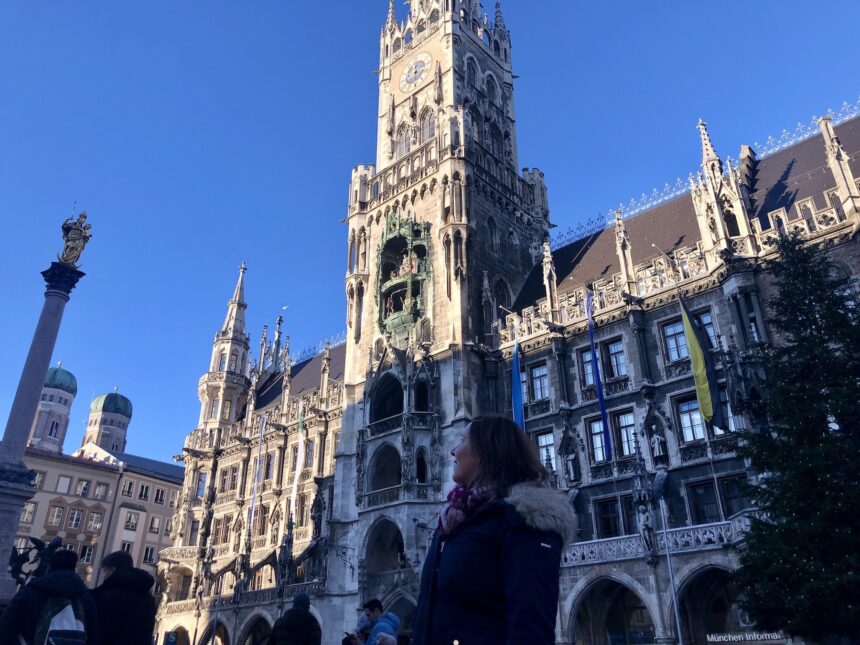
If you happen to swing by her on your ancestry trip to Germany, don’t forget head to the Marienplatz.
Here, you can take your souvenir photo with the impressive Munich Town Hall (German: Rathaus) in the background! It almost feels like stepping into a postcard!
Further plan your visit to Munich with this guide:
10 Top things to Do in Munich, Germany for Ancestry-Inspired Travelers
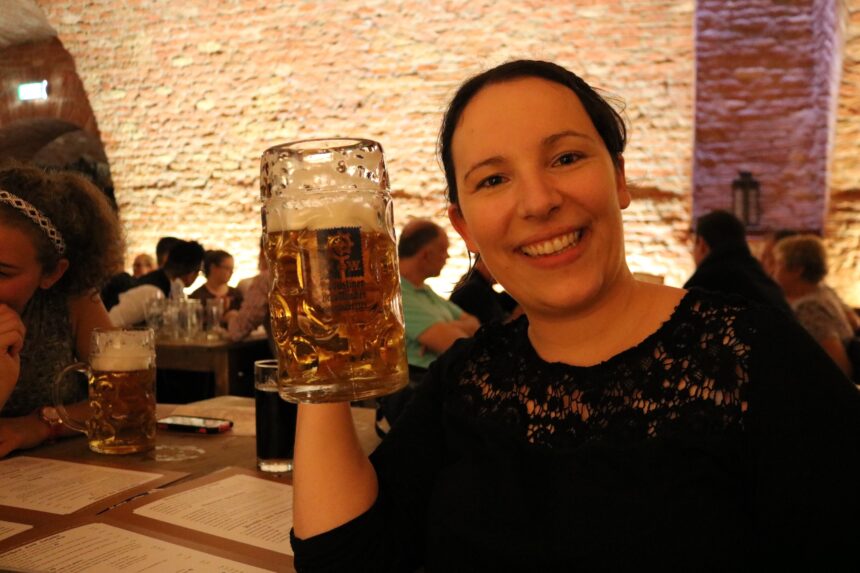
For some castle-sightseeing, add the nearby Nymphenburg Palace to your to-see-list or sip an extra-large Bavarian beer! The latter is even possible outside the Munich Oktoberfest hours.
The Munich Hofbräuhaus, for example, is open all-year-round for Bavarian beer and dishes and also lets you listen to Bavarian oompah music if that’s your thing! It’s not mine, but hey, everyone is different! 😀
And while we are on it, why not combine your trip to the homeland with the world-famous original Oktoberfest? But keep in mind: The festival takes place mainly in September (not October!). The 2026 dates are September 19 – October 4, 2026.
If you are planning a trip to the Munich Oktoberfest, check out this blog post:
10 Things you need to know before visiting the Oktoberfest in Munich, southern Germany
3. Cologne (Köln)
Another famous bucket list item of many (ancestral) travelers to Germany is to see the Cologne Cathedral (Kölner Dom), which took a staggering 632 years to build! (1248-1880). And by the way, it is still not quite finished today.
The inside of the Cathedral is of course very impressive. But you can also climb the south tower for sweeping views over the city and the river Rhine.

Cologne was unfortunately very badly damaged by the bombing attacks during World War 2, which is why there are not that many old buildings there. To this day, WW2 bombs are found every other week by construction workers. As long as they are in the ground, they don’t do any harm.
But when they come to the surface, they need to be detonated in a controlled environment and usually a lot of people need to be evacuated from their homes for a few hours.

However, you can see a few houses that have been left in Cologne’s lively Old Town. You can take a stroll through the narrow lanes and pretty pastel houses, or stop for a Kölsch beer in one of the traditional brewhouses.
Just remember that Kölsch beer is traditionally served in a 0,2 or 0,3 liter glass! A far cry from a Bavarian beer, which usually comes in at least half a mug (0,5 liter) or even 1 liter in a “Stein” (German: stone) mug or glass.
4. Nuremberg (Nürnberg)
Nuremberg is another popular destination in Bavaria, where you can still find many medieval (half-timbered) houses, typical food and drinks from the so-called “Franken” region, such as “red beer”, several world-class museums and even a medieval castle on a hill.

My tip: When you are here, don’t miss visiting the Albrecht Dürer Museum located in an incredibly preserved house built in 1420!
Albrecht Dürer (1471-1528) was a German Renaissance painter and the house today looks almost exactly as it would have looked when Dürer lived here.
To me that was one of the best places to visit in Germany for an authentic time traveling experience back to the Middle Ages!

5. Dresden
Even though Dresden is unfortunately another German city that got really badly bombed during World War 2, Baroque beauty waits for you in Dresden.
Especially around the stunningly rebuilt Baroque-style Frauenkirche church (original built 1726-1743) made from soft sandstone.
When you wander through the Old Town, you can step inside the Zwinger Palace to admire its ornate courtyards, visit the Royal Palace with its historic armory.

When I was in Dresden, I didn’t spend that much time outside because it was at the end of February, very cold and even snowing! I took a guided tour there and our tour guide welcomed us with “Welcome to the Arctic!” 😀
If you happen to be there in the warmer summer months, you can stand on Brühl’s Terrace overlooking the river Elbe and watch the paddle steamers glide by.

6. Lübeck
The UNESCO World Heritage city Lübeck in the far north of Germany is one of the best places to visit in Germany if you want to feel the spirit of the Hanseatic League (the medieval European merchant’s union) come alive.
You can walk through its brick-gothic streets, stand beneath the impressive Holstentor city gate, and wander past many former merchant houses that once stored goods from all over the world.
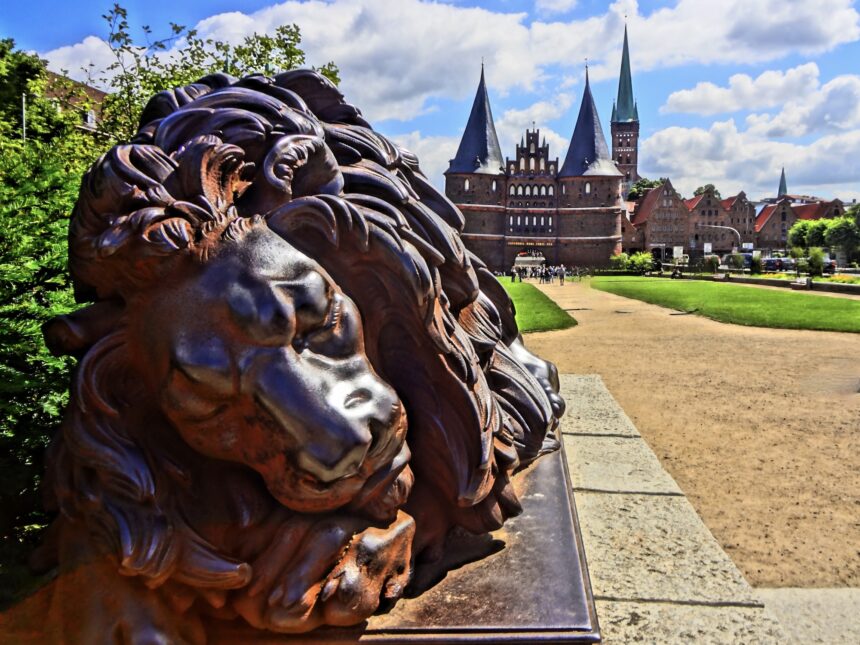
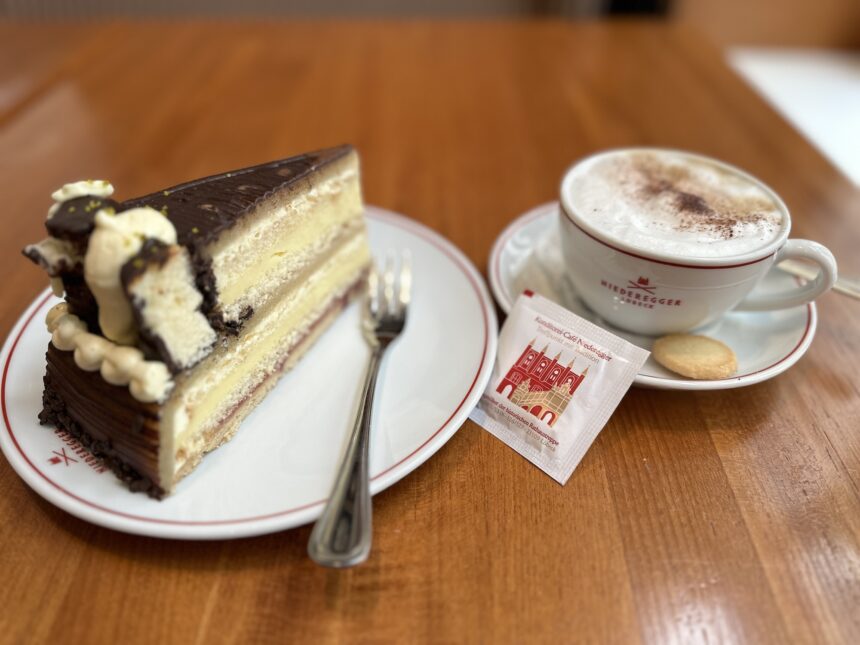
In terms of (sweet food), Lübeck is world-famous for marzipan!
You can watch it being shaped at the Niederegger shop and taste every marzipan flavor imaginable at the Niederegger café – including a cappuccino with marzipan flavor!
Ancestry Pro Tip: If you have ancestors from nearby Hamburg and if time allows, I would definitely recommend a visit to the city of Lübeck as Hamburg, too, got very badly bombed during World War 2 and there are not many old houses left.
As a guide from Hamburg once told me: Lübeck is where you should head to if you want to see what Hamburg looked like pre-World War 2.
I explain why Lübeck was not hit as badly in Word War 2 and more in this blog post:
Merchants, Marzipan & More: A time Traveling Trip To Lübeck, Northern Germany

7. Leipzig
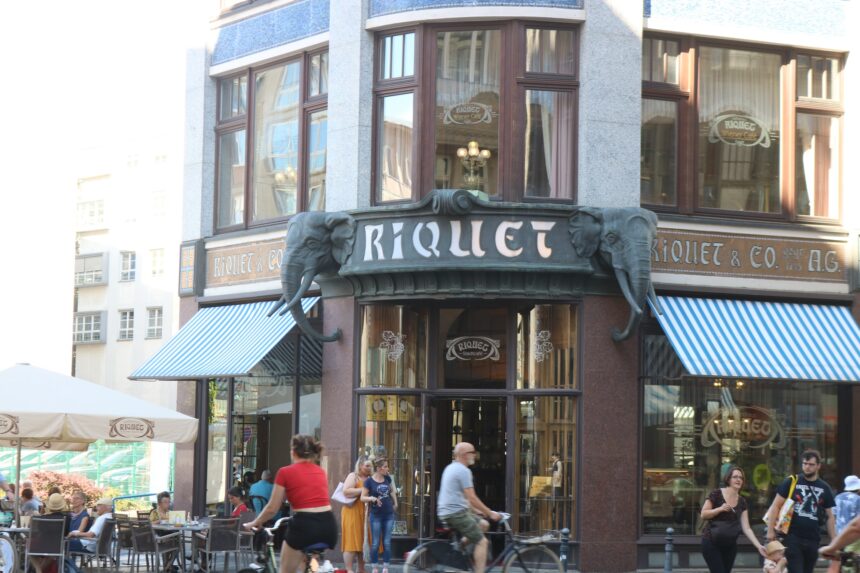
Leipzig in eastern Germany (formerly part of the East German government GDR) is one of the best places to visit in Germany if you enjoy a mix of history, music, and cool urban corners.
You can, for example, check out the inside St Thomas Church, where Baroque composer Johann Sebastian Bach (1685-1750) once worked.
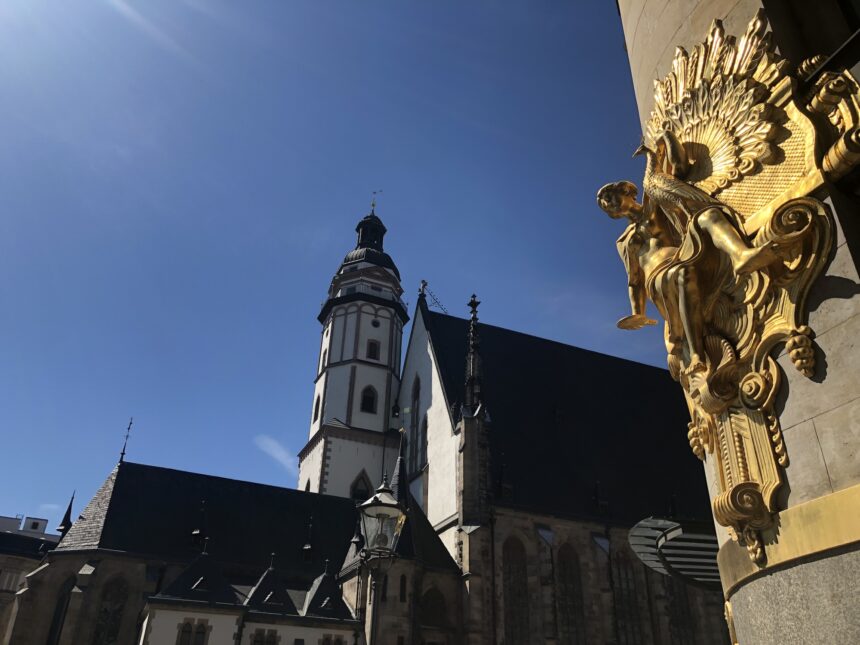
Alternatively, browse the shops and cafes inside old passageways like Mädlerpassage, or grab a drink at Karl Liebknecht Street named after the socialist Karl Liebknecht (1871-1919), which the locals simply call KarLi.
The “Museum in the Round Corner” offers a look into the former GDR and the spy activities that even went on between neighbors and friends.

But one thing I find especially impressive are the city’s many “Gründerzeit” houses, which were built in the time of the industrialization in Germany (ca. 1850-1918) and the economic boom that took place in that time.
Read more about Leipzig in this blog post:
One Day in Leipzig: Your Ultimate Guide to Saxony’s Hidden Gem
8. Potsdam
If your plan in 2026 is to “revisit Prussia” and see not just one, but a row of Prussian fairy tale castles, head to Potsdam in Brandenburg, which is only a short regional train ride away from Germany’s capital Berlin.
My tip: Explore the impressive Sanssouci Palace (No Worries Palace) built by Prussian King Friedrich der Große (1712-1786), in English: Frederick the Great or Frederick II.
The inside is impressive, but you can also take a leisurely stroll through the beautiful gardens or spend an afternoon in the Orangery Palace surrounded by greenery.

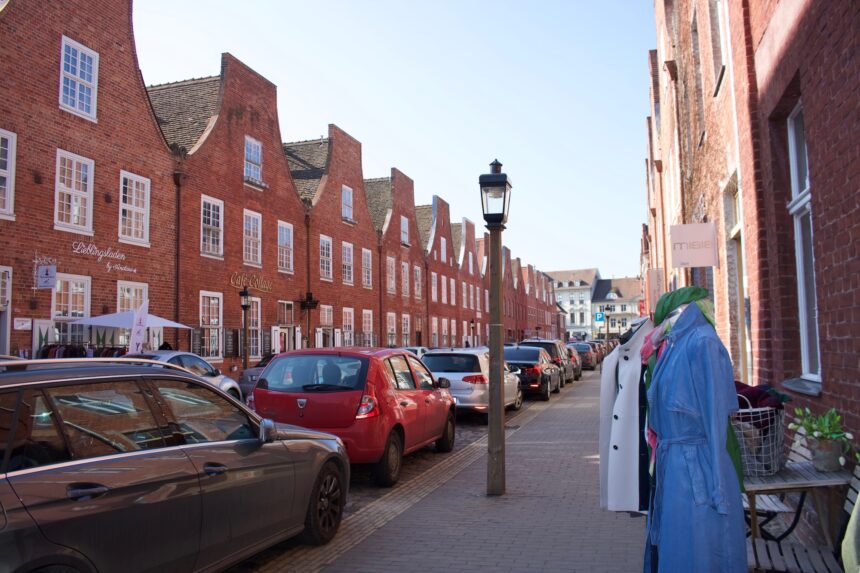
Another hot tip: Potsdam’s “Dutch Quarter” was built by the Prussian King Frederick William I for Dutch craftsmen who emigrated to the city on the invitation of the King.
Today, the area with typical Dutch-style red brick houses, complete with white joints, shutters, and curved gables, offers many cafés, restaurants and little shops, so is perfect for a leisurely stroll.
Homeland
2. Best places to visit in Germany for nature and scenic beauty:
9. Neuschwanstein Castle in Bavaria
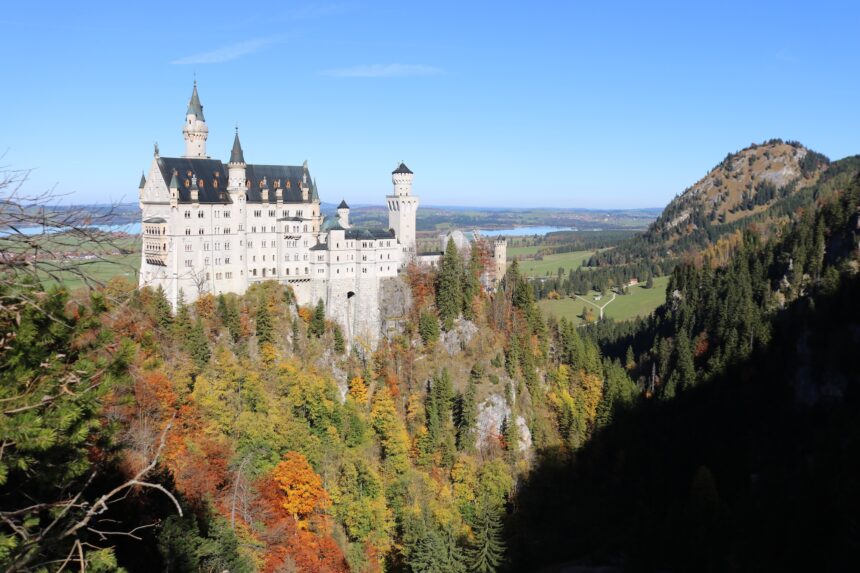
Neuschwanstein Castle is of course one of the best places to visit in Germany if you love dramatic views and fairy-tale castle architecture! And so popular with tourists that it has become one of THE symbols for the whole of Germany!
From Munich, there are many tourist tours by bus or by train, which you can easily hop on to get to Neuschwanstein Castle in a day and back!
Once there, you can tour the castle’s interior on a guided tour (for an entrance fee) and/or walk up to the Marienbrücke bridge to get yourself in front of that classic postcard picture that everyone knows!

Just bear in mind that it’s quite a steep hike up to the castle and the Marienbrücke. But there is also a bus or a horse-drawn carriage that you can take.
Read more about visiting Neuschwanstein Castle in this blog post:
Neuschwanstein Castle in a Day: How to Make the Most of Visiting Germany’s Fairy Tale Castle
10. Oberammergau in the Alps
The Bavarian village of Oberammergau is another popular and often included stop on the bus day trips from Munich to Neuschwanstein Castle.
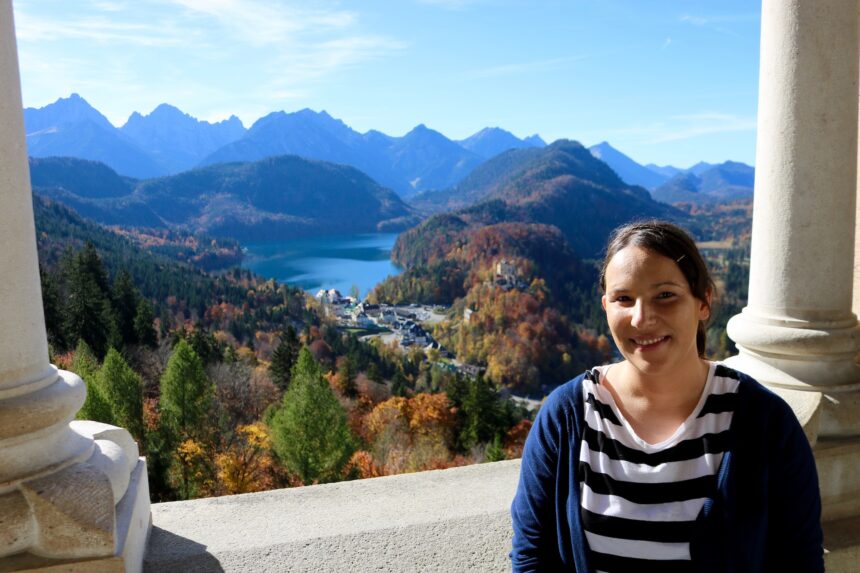
As the bus rolls through the so-called “Ammergau Alps”, you pass green (or white in the winter!) meadows and mountains before arriving in a village known for its winter woodcarving tradition and beautifully painted houses.

My bus tour that was headed for Neuschwanstein Castle only stopped here briefly, but I still managed to get a good overview and was impressed with the many cute houses and woodcarving shops as well as the local church with the Alps in the background.
In my opinion: A Bavarian postcard motif not to be missed when you are in the Munich area!
Oberammergau is also home to the world famous Passion Play, performed since they the year 1634 as a vow after the inhabitants survived the devastating Plague.
Ironically, the Passion Play scheduled for 2020 was cancelled because of the Covid-19 pandemic, but took place two years later in 2022. So now they are back on schedule and the next performance takes place in 2030.

11. Brocken in the Harz Mountains
Back to northern Germany, which is not generally known for mountains, with one exception: the Harz Mountains!
The “Brocken” is the highest mountain in northern Germany and located in the Harz Mountains – an area partly in Lower Saxony (formerly in West Germany) and partly in Saxony-Anhalt (formerly in East Germany).
To get up there, you can ride the old steam-powered Brockenbahn (which is quite unique because steam-powered trains are not normally in use in Germany anymore) through forests and meadows.

When I was there in February once, the frosty landscape and the snow-covered trees certainly looked “otherworldly” to me. A pretty memorable experience!

But it’s also worthwhile to come here in the summer, when you will get rewarded with big, clear views all the way into the Harz valley.
Or, if you have a thing for witches and other spiritual beings, head to the Brocken on the so-called “Walpurgis Night” (April 30th to May 1st). Legend has it that in this night, witches gather with the devil on the Brocken mountain.
So, in towns like Schierke and Thale, located at the foot of the Brocken, there will be many festivities such as witches’ processions, medieval markets, music, dancing, and the lighting of bonfires.
In former times, this was done to welcome spring after a long and dark winter.
12. Jork in Altes Land
“Altes Land” means “the Old Country”. This area is Germany’s largest fruit-growing region and is located just outside of Hamburg, Germany’s second biggest city in terms of population (1.9 million inhabitans).
So you can easily get to the villages and small towns (such as “Stade”) in the Altes Land by (regional) train or a short drive.

The village of Jork (around 12.000 inhabitants) is one of the best places to visit in this area of Germany for peaceful countryside charm.
Especially in the spring when the apple blossoms are in full bloom or in the harvest time between August and October.
You can cycle through orchards, visit traditional farm cafés serving homemade cakes, or admire the beautifully decorated (farm) houses, some of them half-timbered.

13. East Frisia and the island of Norderney
If your ancestors once lived in East Frisia (“Ostfriesland” in German), you should not miss this chillaxed corner located on the northwestern tip of Germany directly at the shores of the North Sea.

In the town of Norden (yes, there is a town that literally means “North”), for example, you can learn more about the East Frisian obsession with tea drinking and why people in this region consume more tea per head than the British!
You can also learn about the “East Frisian Tea Ceremony”, which I found particularly tasty and which I still follow at home sometimes! 😉

In Norddeich (a city quarter of Norden), you can watch super cute baby seals at the seal nursing station and / or take the ferry to the island of Norderney.
Nordernery is one of the 7 islands on the East Frisian Coast, which also include the islands of Borkum, Juist, Baltrum, Langeoog, Spiekeroog, and Wangerooge.

Extra tip: Due to the strong tides in the North Sea, the sea water retreats so much at times that you can literally walk on the bottom of the ocean on a guided mudflat hiking tour.
You always need a professional guide though because the tides can return quickly, so it’s dangerous to walk here by yourself.
In my opinion, taking a guided mudflat hiking tour is well worth it because it’s a super fun adventure for adults, kids and grandkids alike!
And if your ancestors were from this area, you can definitely feel closer to them through this cool activity!

14. North Frisia and the island of Amrum
Further north from East Frisia, you will find the region of North Frisia (“Nordfriesland” in German). Shoreside and on the islands, you find many cute houses with their typical thatched roofs.
Storms, flooding, poor harvests, shrinking farmland and several wars with nearby Denmark pushed many North Frisians to leave the islands, especially Amrum and Föhr, in the 19th century.

Many settled in New York City and opened delis where they sold homemade cakes and salads according to the recipes from North Frisia.
Aside from Föhr and Amrum, you will also find the islands of Sylt (known to be a “resort island” for richer Germans or well-off people, a bit like the “Hamptons” in the US), Pellworm, Nordstrand, and the tiny and sparsely populated Halligen islands.

Today, it is much more peaceful here. So when I went to Amrum by ferry once, I rented a bicycle and cycled leisurely around the island.
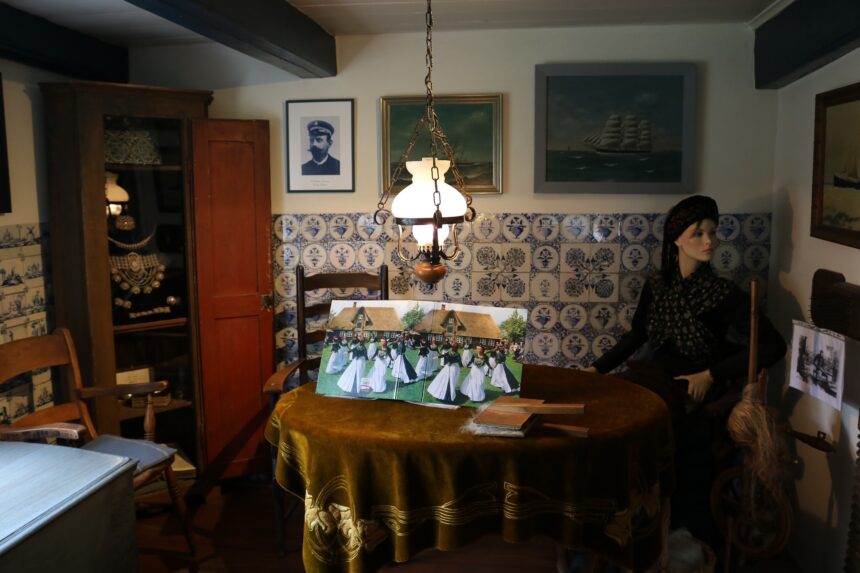
On my little tour, I visited an old house, which had been turned into a folk museum and looked the same as it had done in the 19th century: The “Öömrang Hüs” (free entrance).
Here, I also saw some of the traditional dresses (called “Tracht” in German) that people wore here in former times there and still do sometimes if the local have traditional dances.
3. Best places to visit in Germany where time stands still
15. Cloppenburg
Cloppenburg in Lower Saxony (northwest Germany) may just be another small town.
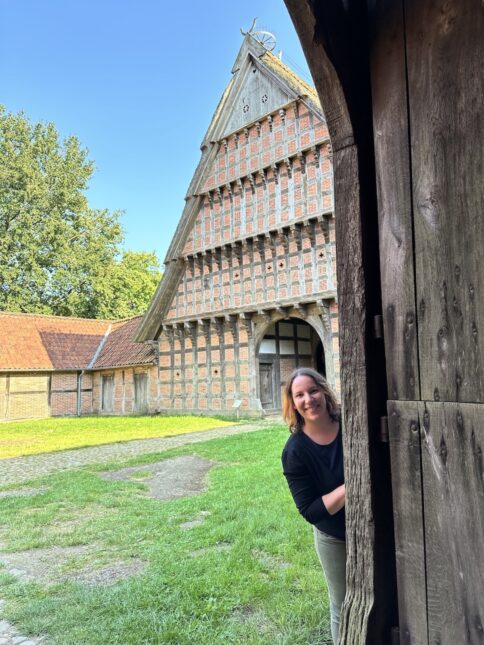
But it is one of the towns that has an incredible, so-called open-air museum (also known as living history museum), which you can find all over Germany.
These kind of museums most often focus on houses from their particular region.
So like in other open-air museums in Germany, historic farmhouses from all over the region (most of them from the 1800s) have been brought to Cloppenburg and re-erected here. So you can literally step into them!

Visiting such a living history museum is an easy and fun way to get a sense of your ancestors’ daily life without reading a single textbook.
Pro tip: When you take a guided tour in English here (like we do on my 4-day emigration-themed tour in Bremen and northern Germany), a local guide will give you even more insights into the daily lives of people that lived in these farming houses and why many of them decided to emigrate to America or other places overseas.
16. Wernigerode
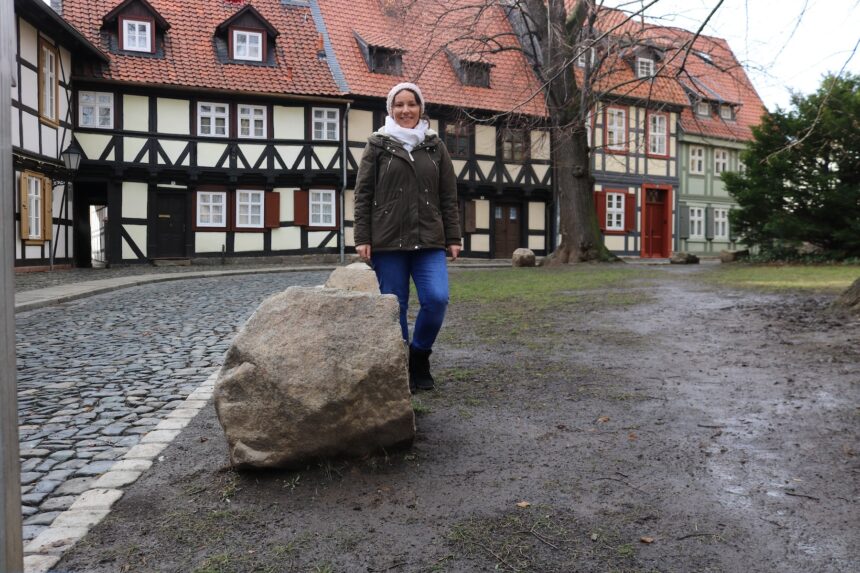
Wernigerode in Saxony-Anhalt (again, in the Harz Mountains) is one of the best places to visit in Germany for colorful half-timbered charm.
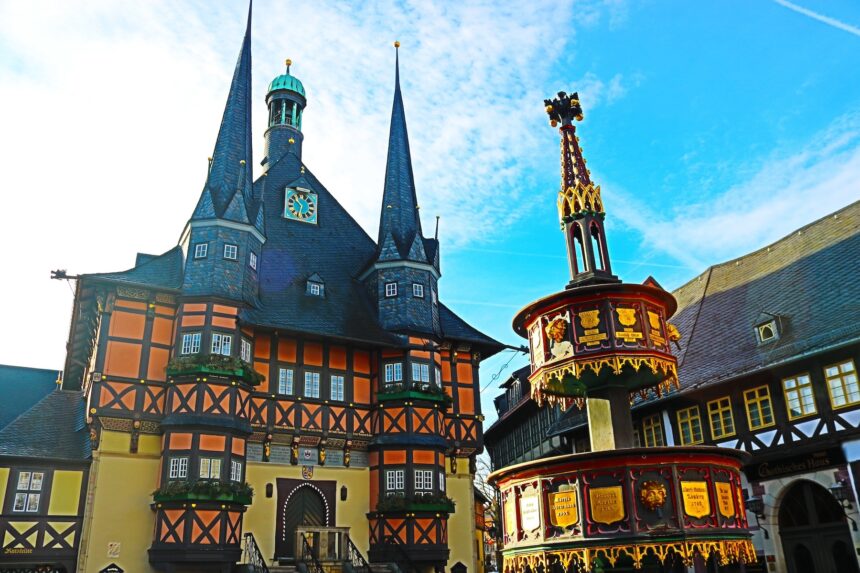
You can visit the bright town hall, hike or ride the little train up to Wernigerode Castle, or wander through streets full of crooked beams and cheerful facades.

The town feels lively without being overcrowded, such as places like Rothenburg-ob-der-Tauber in Bavaria, where all the tourists go.
I once visited in February. Because it was so cold and I visited on a weekday, it almost felt like I was alone when walking through the many rows of half-timbered houses here. 😀
An experience that certainly adds to the “time travel feeling”.
Be sure not to miss the town hall of Wernigerode (Rathaus), which was built in 1420!
17. Görlitz
If you are a film and / or history lover, Görlitz in Saxony is definitely one of the best places to visit in Germany!

Compared to otherGerman cities, there was less war damage in Görlitz during World War 2.
Thus, many movie producers from all over the world, including many Hollywood productions, have come to this German city to shoot historical movies here.
And that’s why the perfectly preserved historical town center of Görlitz is also known as “Görliwood”.

When here, you can explore quiet courtyards, visit famous movie locations from films like “The Grand Budapest Hotel” or walk across the Old Town Bridge into Poland.
The Polish twin city of Görlitz is called “Zgorzelec” and was originally one with Görlitz.
When I was here, I took a guided tour by bus, on which we drove into Poland and also visited a local brewery with tasing. A guided city tour with crossing over into a different country and tasting a local beer from the area? Win, win, win! 😀
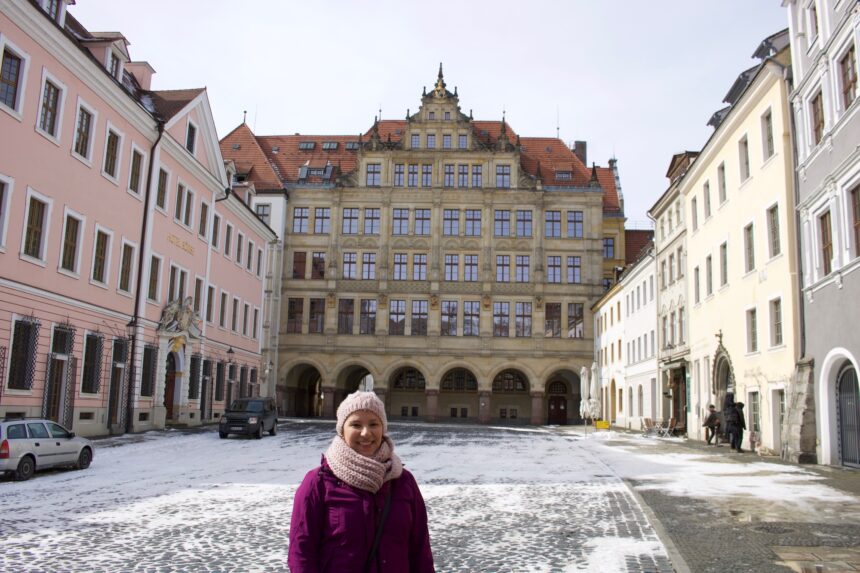
18. Quedlinburg
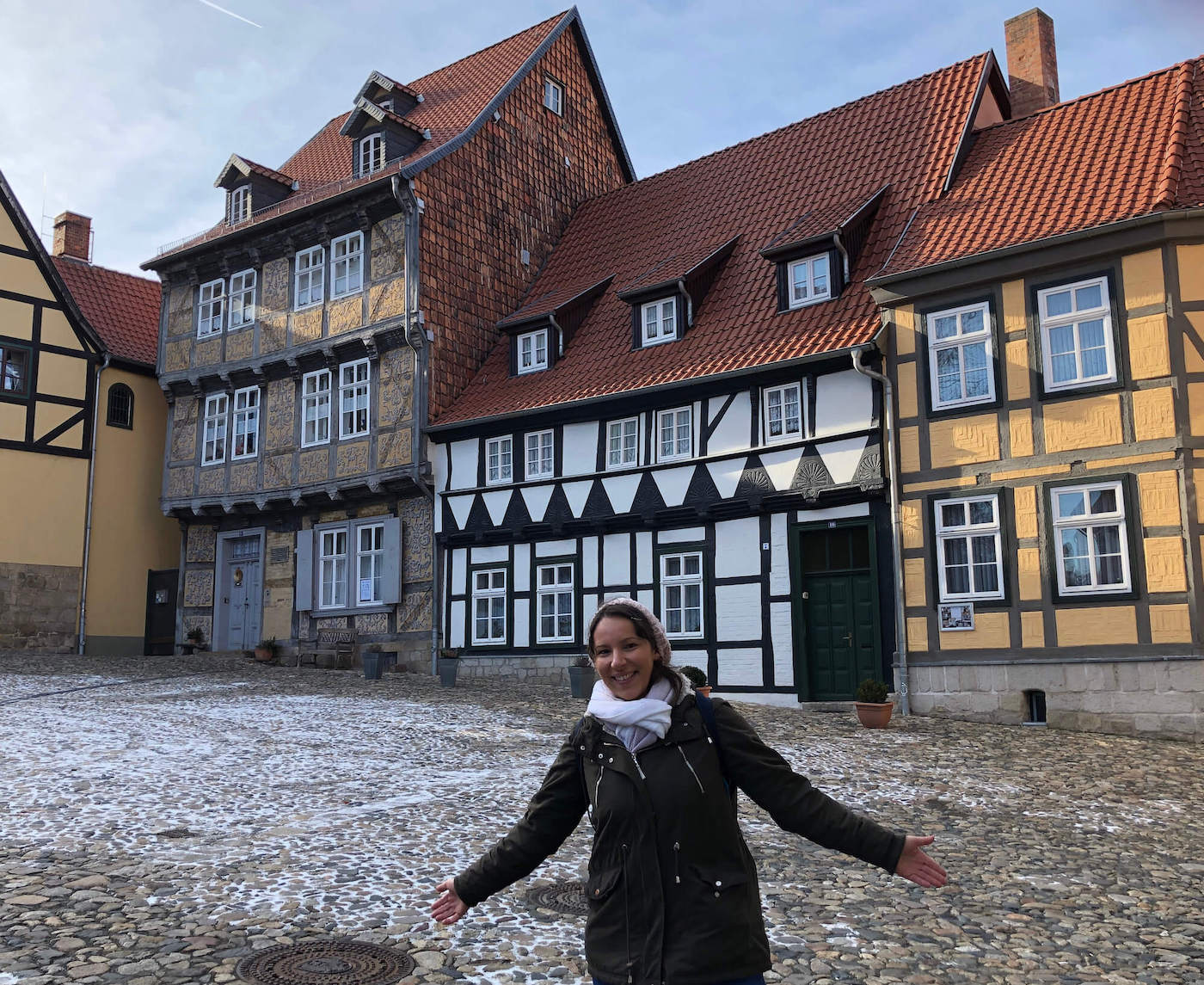
Walking around in Quedlinburg, a city in Saxony-Anhalt (formerly in East Germany), almost feels like walking in a history book! In fact, the city has so many well-preserved half-timbered houses (over 1,300!) that the whole Old Town of Quedlinburg was declared a UNESCO World Heritage Site!
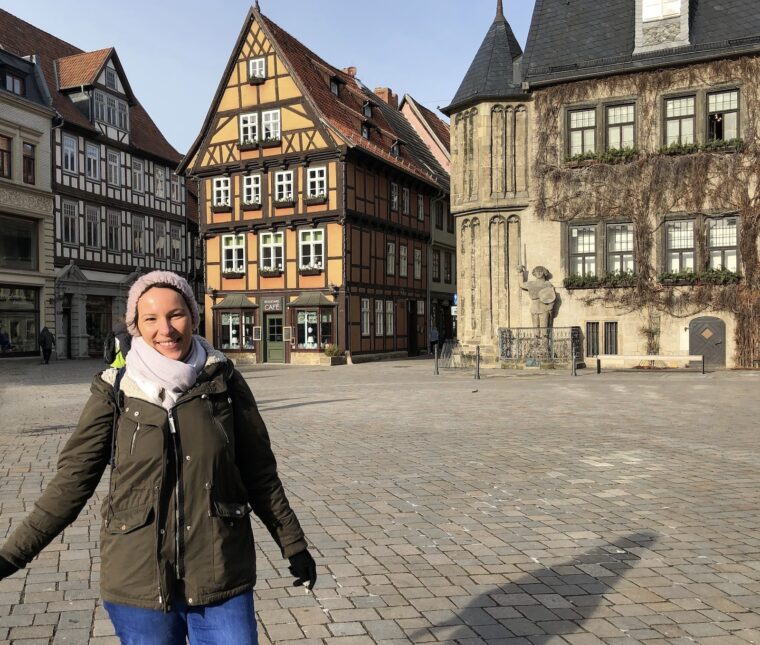
So, you can stroll for hours without running out of charming streets. Again, in February it felt like I was almost alone traveling back in time here.
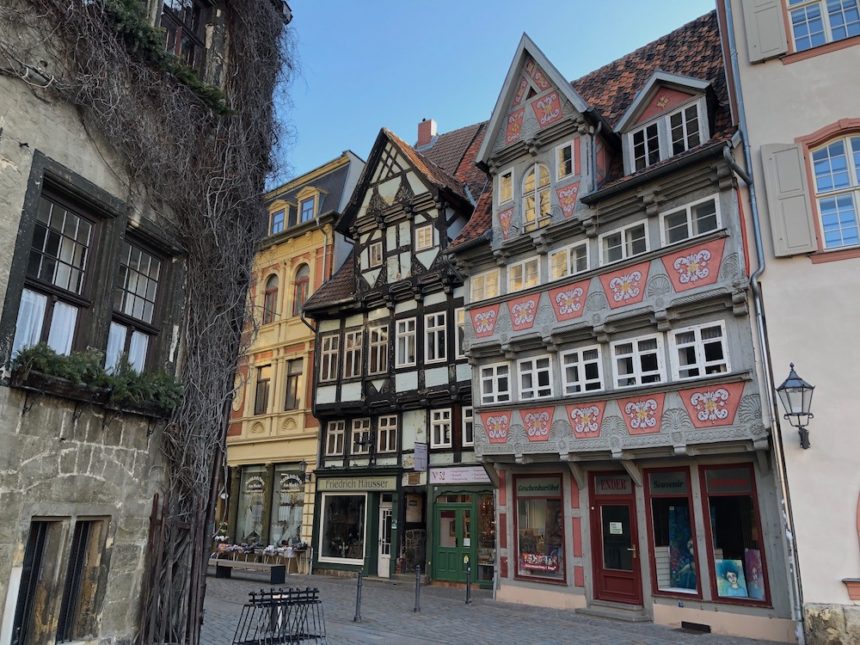
And like a true medieval town, Quedlinburg also features a castle. The castle hill offers a great viewpoint, and the market square is ideal for lunch or a coffee break.

19. Duderstadt
Duderstadt is another hidden gem with medieval charm, where half-timbered houses and peaceful streets bring the Middle Ages to life.
When I visited, I was super impressed with a town that boosts so many streets with perfectly preserved half-timbered houses!

When Germany was divided into the communist East and the capitalist West Germany (1949-1989), Duderstadt was located in Lower Saxony, a county belonging to West Germany.
But the town was located very close to the border to East Germany, which was “a sharp border” during the time the Berlin Wall was up (1961-1989).
Thus, many of the old houses were not touched or even demolished as in other West German cities.
That is lucky for us today. Because now Duderstadt is one of the best places to visit in Germany if you are looking for a quaint, medieval town that isn’t as overcrowded as, for example, Rothenburg-ob-der-Tauber in Bavaria.
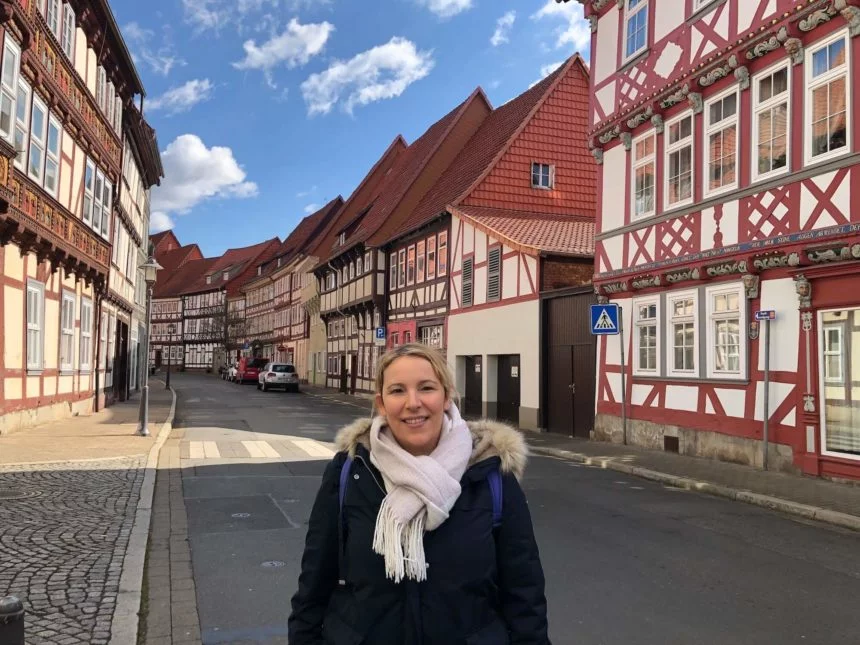
Pro Tip: Don’t miss Duderstadt’s magnificent town hall (Rathaus)! The oldest parts date back to 1302!
Today, you can visit the museum inside and even the former torture chamber in the basement about the not-so-happy times in Duderstadt.

20. Xanten
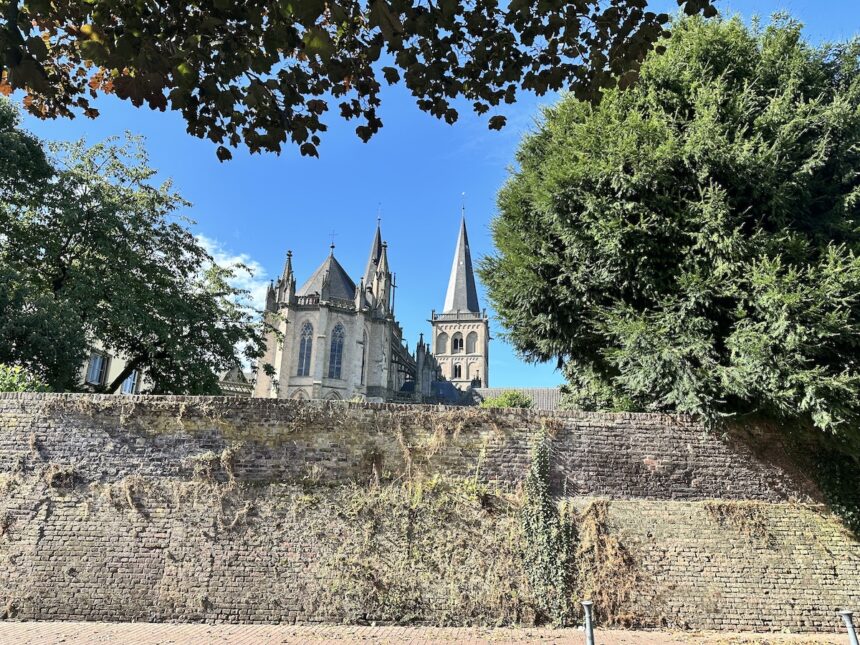
The town of Xanten in North Rhine-Westphalia is located on the river Rhine and offers a unique opportunity to walk through an ancient Roman city.
After all, the museum park LVR – Archaoloigcal Park Xanten is Germany’s best-preserved Roman archaeological park!

Here, you can wander through the reconstructed Roman town with its temples, bathhouses, fully-furnished villas and even an amphitheater!

Extra tip: The medieval town center of Xanten is worth seeing, too! It was erected nearby the old Roman ruins.
When I visited Xanten, I found several quaint medieval houses and churches (including the Cathedral of Xanten) here!
Read more about visiting the Roman Park in Xanten in this blog post:
Step Into Roman Times At The LVR- Archaeological Park Xanten, Germany
21. Lüneburg
Another town in northern Germany that is not so famous or popular with international tourists, but which I think has a lot to offer though is Lüneburg in Lower Saxony.
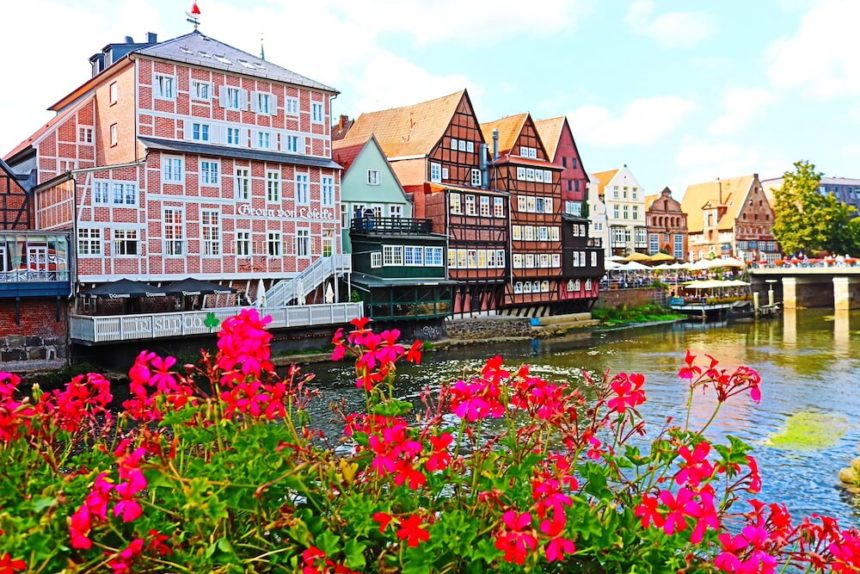
During the times of theEuropean trading union “Hanseatic League”, Lüneburg was most famous as an export and import town for salt!
In the Middle Ages and even up to many of your ancestors’ times in the 18th and 19th and 20th centuries, salt was very sought-after.
This is because you could preserve a lot of goods and foods, such as dried fish, for longer with salt. Thus, salt was also known as “the white gold”.
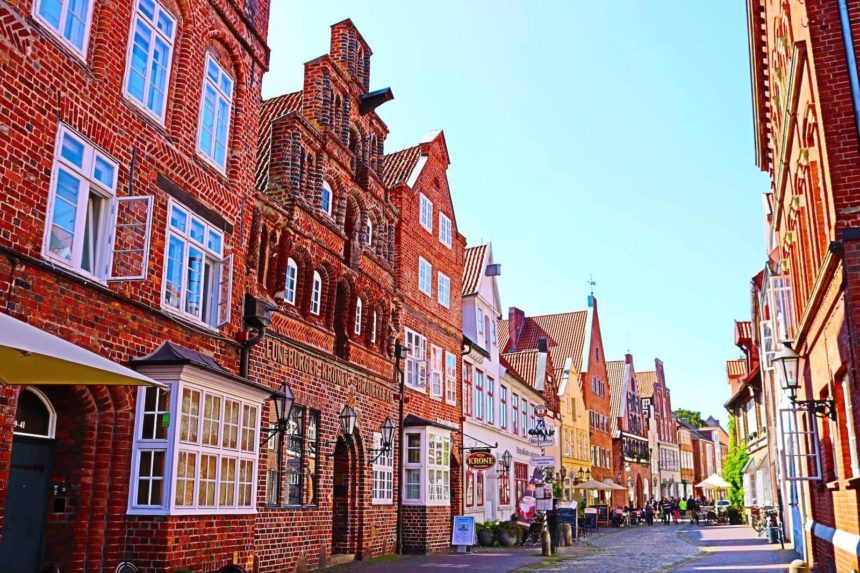
When you visit Lüneburg today, you can explore the Old Saltworks Museum, climb the water tower for a city view, or enjoy “coffee and cake” (Kaffee und Kuchen) at the many cafés tucked between historic houses.
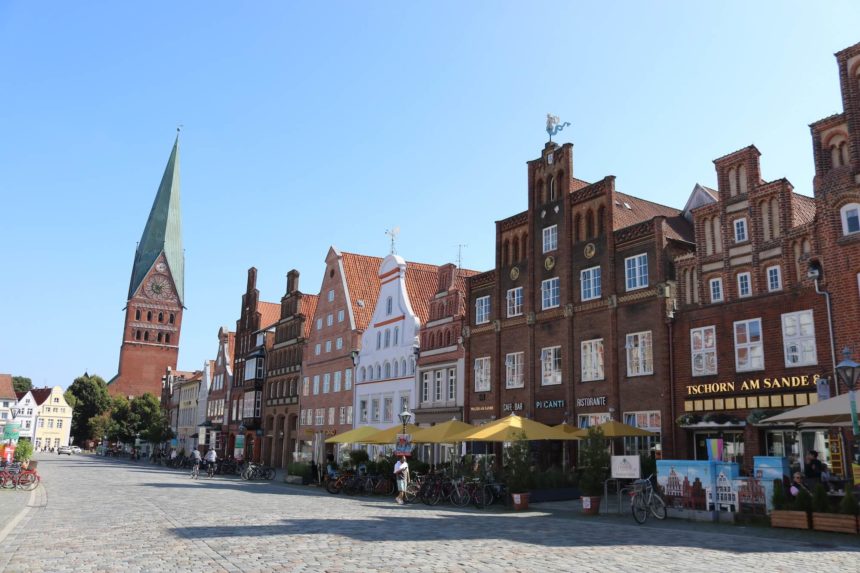
Plus, the cafés on the market square are lively and perfect for people-watching!
22. Wismar
Another little surprise awaited me on my visit to Wismar in the north-Eastern German state of Mecklenburg Vorpommern.

When I was here, I was really intrigued by the many historical houses that can still be found here, including the restaurant “Alter Schwede” (meaning “Old Swede”) located in a house built in 1380!

You will find a lot of hints to the former Swedish rule here.
The Swedes came to the northeast of Germany during the so-called“Thirty Years War” (a religious war between Catholics and Protestants that lasted from 1618 to 1648), were fighters for the Protestant cause and in control of the city from 1648 to 1803.
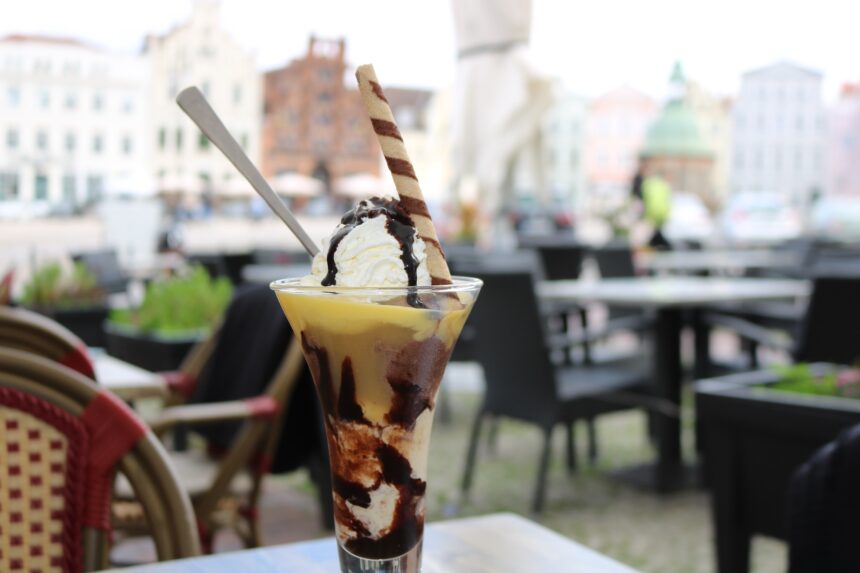
And for those with a sweet tooth, there is even an ice cream cup called “Schwedenbecher” (Sweden Cup)!
4. Best places to visit in Germany to (literally) walk in your ancestor’s footsteps
23. Bremen
The city of Bremen, where I am based and work as a tour guide for ancestry-inspired travel, in northern Germany is often overlooked by American ancestry tourists.
There are two main reasons for this:
1. Because Bremen is not so well known and north Germany.
2. North Germany is often considered to be “not as quaint or pretty” as southern Germany, namely Bavaria.

But many of my previous guests that have come to my “hometown of choice” after I suggested Bremen to them were surprised by the many medieval buildings that you can still find here.
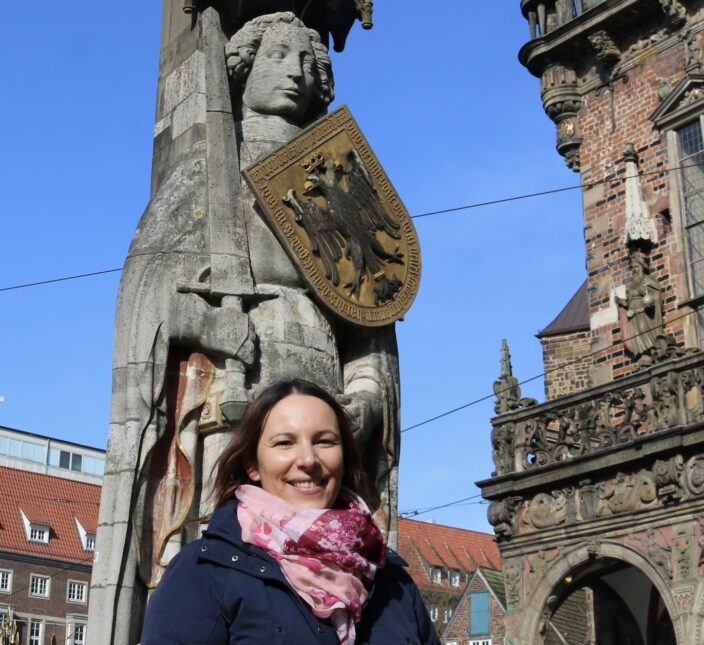
For example, the magnificent Bremen Town Hall and the Roland statue, which were both built in the year 1404 and are thus more than 600 years old!
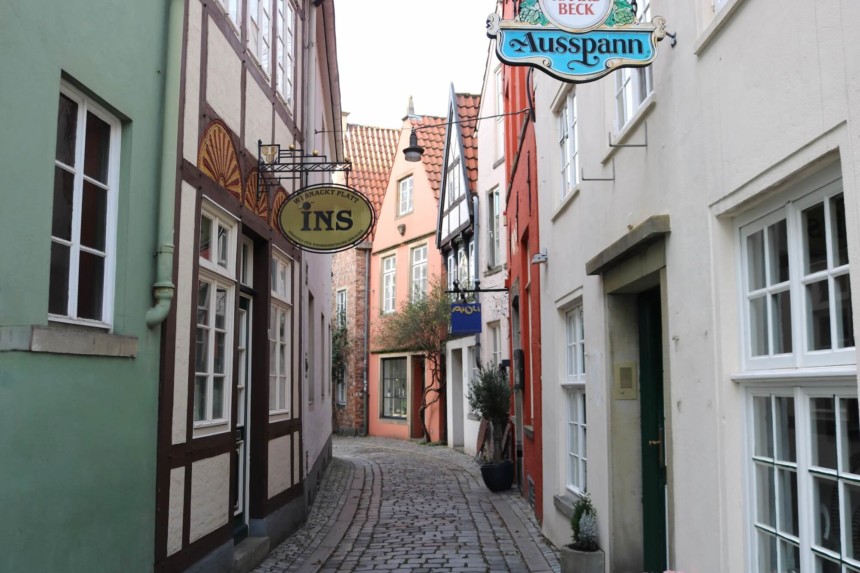
Or the medieval Schnoor quarter, the oldest quarter in Bremen located close to the river Weser and the old harbor of Bremen, from where many emigrant sailing ships left in the early days of emigration from Germany.
The oldest house in this neighborhood full of quaint cafés, restaurants an shops, dates back to the year 1402!
Read more about what you can experience on a visit to Bremen in this blog post:
5 Emigration-Themed Things to Do in Bremen, Germany

24. Bremerhaven
When you come to Bremen on an ancestry trip, you should ideally try to head to Bremerhaven, too.
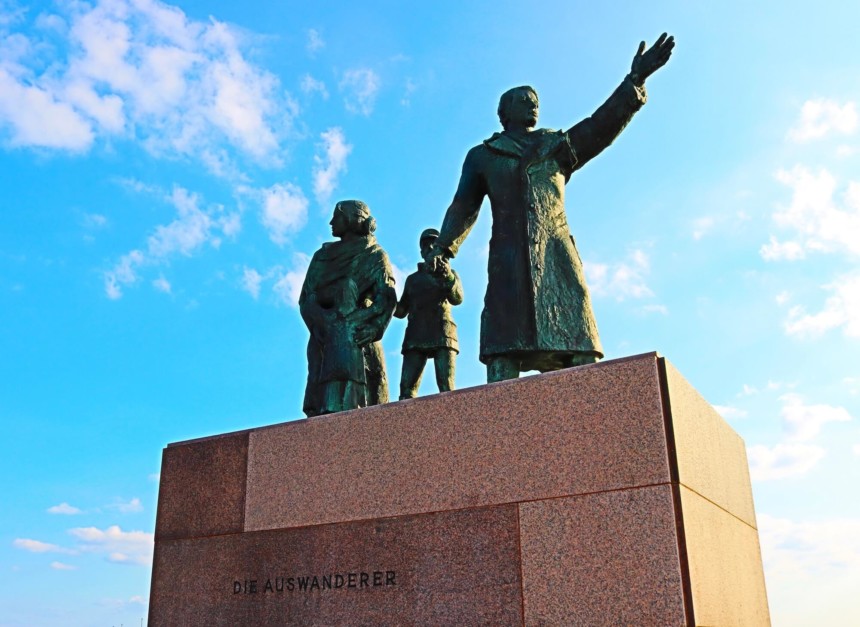
For ancestry-inspired travelers, the city is almost a must because from 1827 when Bremerhaven was established until the 1970s, more than 7 million people emigrated from here!
Most to the United States of America, but some also to Australia, New Zealand, Canada or South American countries.

Their stories vividly come to life at Bremerhaven’s emigration museum. This is also where you can go on an interactive journey to re-live your own ancestors’ emigration journey.
A must-do for every ancestry traveler, which is also why a visit to Bremerhaven’s emigration museum is of course included in my 4-day emigration-themed guided weekend tour in Bremen and northern Germany.
From Bremen, you can easily get to Bremerhaven by car or train.
Or, during the season in the summertime (between May and September), even on a very scenic river cruise, which is by the way included for all guests on my 4-day emigration-themed guided weekend tour. 😉
25. Hamburg
Another great emigration museum and a must for everyone who has ancestors that emigrated via the port of Hamburg is the Ballinstadt Emigration Museum.
This museum is located in the former emigration halls built by Albert Ballin (1857-1918), the former CEO of the Hamburg-America Line (HAPAG).

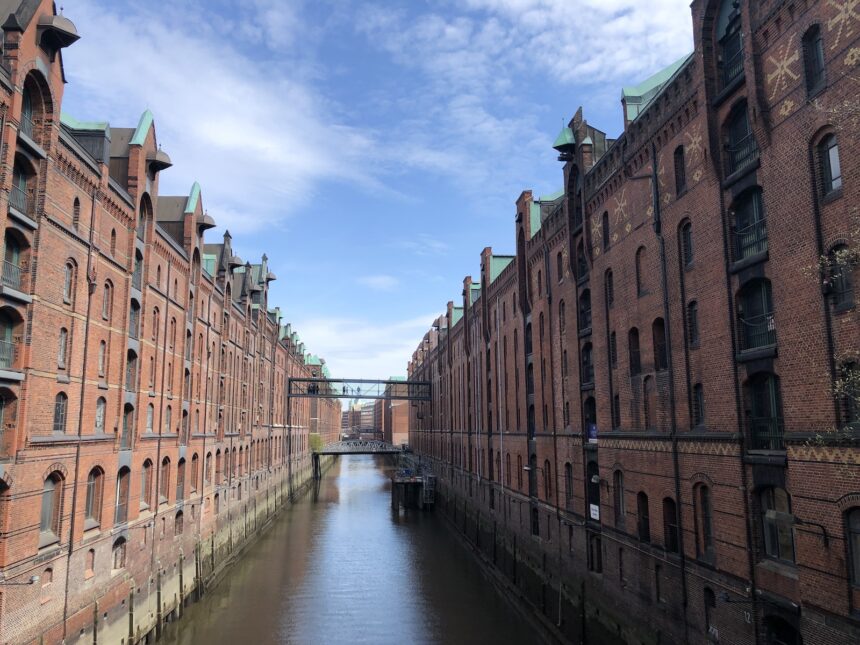
Aside from that, there is much more to see in Germany’s second largest city: For example, you can visit the UNESCO-World Heritage Site “Speicherstadt”.
This is a former warehouse district from the 19th century, where you can also check out the “Miniaturwunderland”, the most popular museum in Germany.
You can also take a boat tour through the canals of the Speicherstadt. A unique experience that I have not seen in any other city so far.
Hamburg’s newest landmark, the concert hall and luxury apartment complex Elbphilharmonie (called “Elphi” by the locals) was built from 2007 to 2017 and eventually cost the Hamburg tax payers much more than originally anticipated.

26. Your ancestral German hometown
Finally, we finish this grand ancestry-inspired tour with the destination you probably want to go to the most on your ancestry trip to Germany: Your ancestral German hometown(s)!
This is where it all comes full circle. Stand where your German ancestors stood, touch what they touched, and feel the deep connection that only home can bring.

But if you really want to go deep and learn more about your ancestors’ lives, you should try to find a local guide, (hobby) historian or regional genealogist here.
These can be found through internet research or at the local “Heimatverein” (historical association), which exist all over Germany, but not every town has one.

These guides can potentially show you your ancestors’ former houses or farms if you are lucky and they are still here (which did indeed happen to several of my previous guests!), find living relatives (perhaps with the same surname and afamily resemblance?
Also happened to several of my guests) or give you a tour at your ancestors’ former church.
Remember: Making these discoveries and connections takes some time to plan and research.
So you should start planning your ancestry trip to Germany and contacting these potential guides in your ancestral hometown(s)several months in advance!

So, which of these destinations will be on your bucket list for the best places to visit in Germany in 2026?
As you plan your ancestry-inspired journey, remember this isn’t just a trip – it’s a homecoming.
Walking the streets your ancestors once knew, tasting the flavors they grew up with, and standing where their stories began will create memories that connect you to your heritage in ways you never imagined.

Your family’s story is waiting to be uncovered – let 2026 be the year when you finally bring it to life!
Unless otherwise credited, all photos by © Sonja Irani | MyAncestorsJourney.com
Need some assistance with crafting your customized Germany ancestry trip itinerary?
Revisit Germany:
The Ancestry Trip Planning MASTERCLASS
Are you planning an ancestry trip to Germany to find out more about your German ancestors, but don’t want to do it alone?
Then you don’t want to miss our upcoming Germany Trip Planning MASTERCLASS, which will open for the next enrollment in March 2026!
The Ancestry Trip Planning MASTERCLASS “Revisit Germany” is a self-learn online course with monthly live calls via Zoom and a private community group just for the course participants.
It is designed to plan your complete trip itinerary within 6 weeks, but you will access to the course for 12 months. So if you join now, you can hold your ready-to-go itinerary in hand by the end of April 2026!
Don’t miss the next opening date and your exclusive discount + bonuses!